Brown Creepers
By Myrna Pearman, Mother Nature’s Naturalist and Backyard Birding Expert
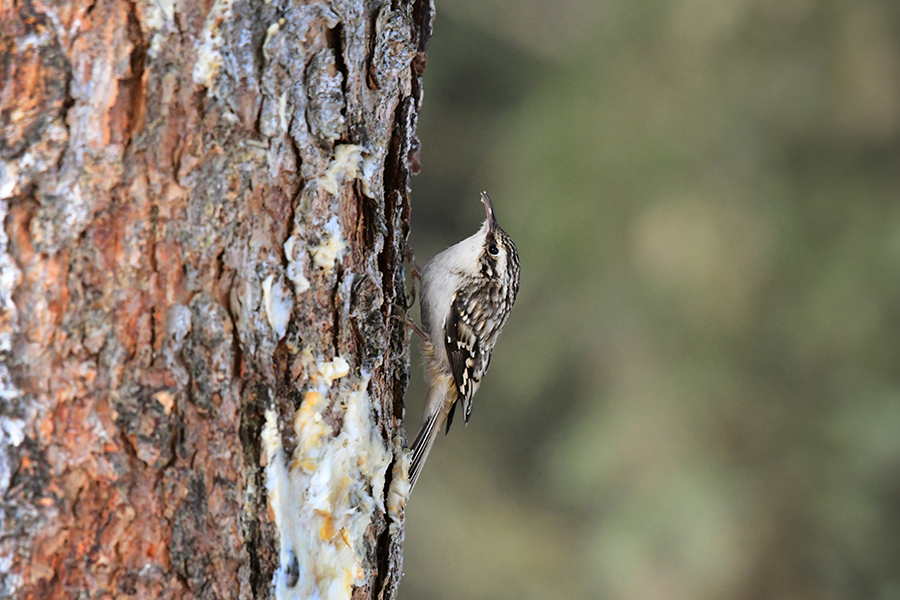
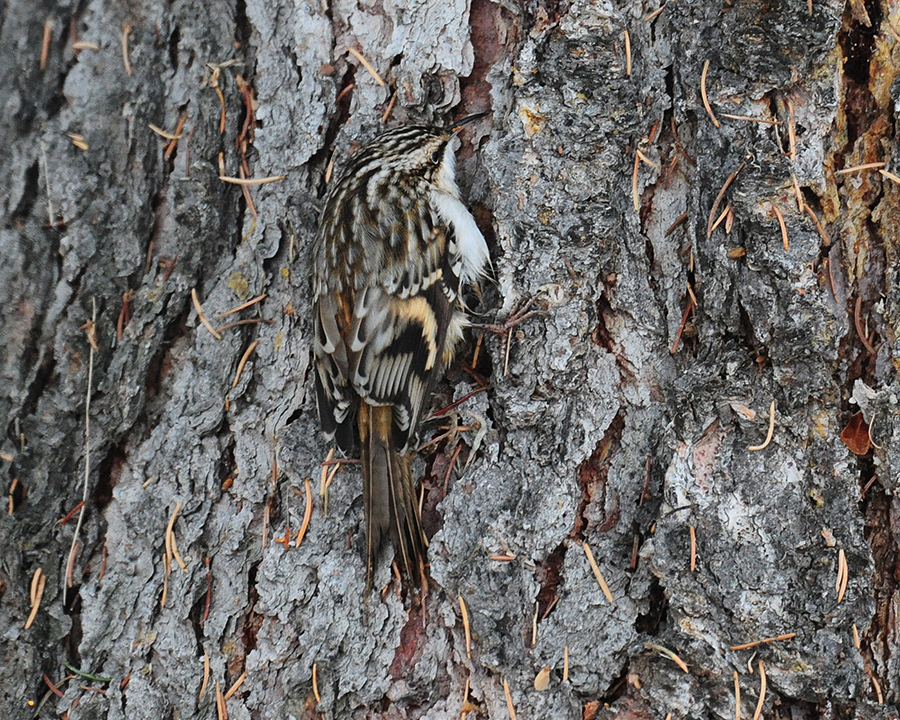
Brown Creepers are an interesting yet often overlooked species across the province. While they are quite common in both rural and urban conifer-dominated forests throughout the province, their small size, thin song, cryptic coloration, and habit of feeding on tree trunks help them escape detection.
While some individuals are year-round residents, those nesting in the northern reaches of their range and at high altitudes will migrate south or to lower elevations for the winter.
Using their stiff tails and tiny but sharp feet, creepers hitch themselves upwards, pecking with their tweezer-like beaks at insects and other tiny food morsels tucked into the undersides of bark scales. Brown Creepers and nuthatches are often found on the same tree trunks, where they can each find insects and other food items without competing due to different feeding strategies: the creepers search the undersides of the bark on their upward journeys, while the downward-traveling nuthatches glean from the tops.
Once they reach the top of the tree, creepers fly down to the base of a nearby tree and start their spiraling, upward journey all over again.
While insects are their primary food source, Brown Creepers will occasionally visit backyard bird feeding stations to dine on suet, peanut butter and sunflower chips. One winter, I was delighted to have them regularly visit a tree trunk on which I had slathered bark butter (a mixture of peanut butter and lard).
Brown Creepers typically build a small, hammock-like nest behind a loosened flap of bark on a snag, although they have been known to nest in unusual places such as behind window shutters. Some enthusiasts have designed special nestboxes for them, although the use of artificial structures is poorly documented.
Keep your eyes and ears open for this muted but beautiful little songbird!
Have more questions? Visit your local Buckerfield's and we'll be happy to help!