Peanuts
By Myrna Pearman, Mother Nature’s Naturalist and Backyard Birding Expert
Peanuts, although technically legumes, are one of the most popular “nuts” to offer our avian neighbours. Boasting both high fat and protein content, peanuts appeal to a wide variety of both insect- and seed-eating birds. Be sure to only offer peanuts intended for birds; the salted and flavoured varieties enjoyed by people should not be served.
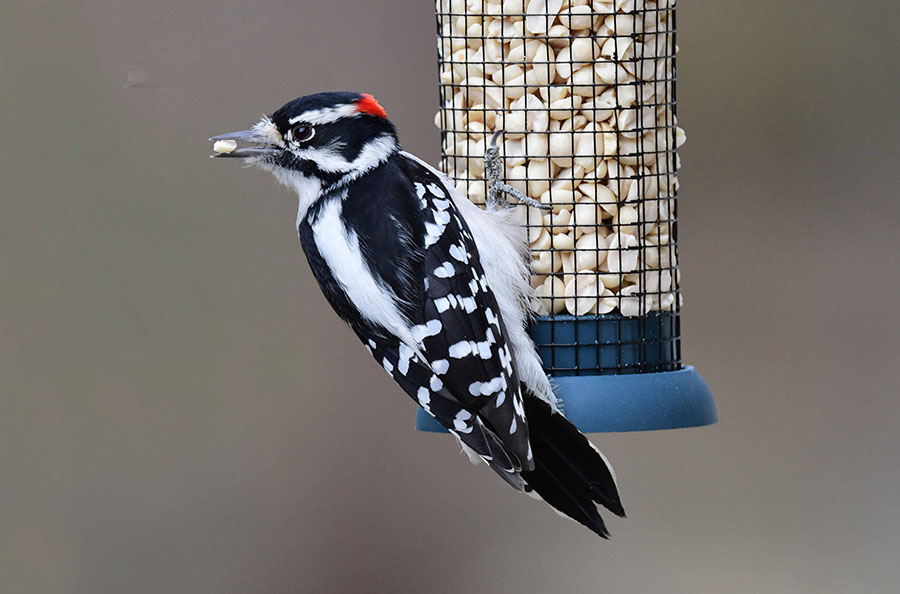
Downy Woodpecker
Peanuts can be offered in the shell (unshelled), shelled or chipped. Unshelled peanuts are a hit with all jay species, which will either peck them open at the feeding station or—more commonly—haul them away to either eat or store for later. Unshelled peanuts can be dispensed from a tray or fly-through feeder. However, expect them all to disappear quickly because jays will stuff as many as they can into their expandable pouches before flying off. Try dispensing just a few peanuts at a time or—to discourage jays and other large birds from simply snatching them all—try dispensing peanuts from a special ring feeder (see image) or by skewering some onto a galvanized wire. Smaller birds, especially nuthatches, will also peck at peanut shells to access the nutmeats inside.
Most people choose to offer shelled peanuts, which are sold either with the skin on (redskin) or off (blanched). The blanched variety are slightly more expensive than the redskins but are easier for chickadees and nuthatches to eat. Shelled peanuts are usually dispensed from specialized metal feeders. Mother Nature’s offers several birdseed blends that contain whole and/or chopped peanuts.
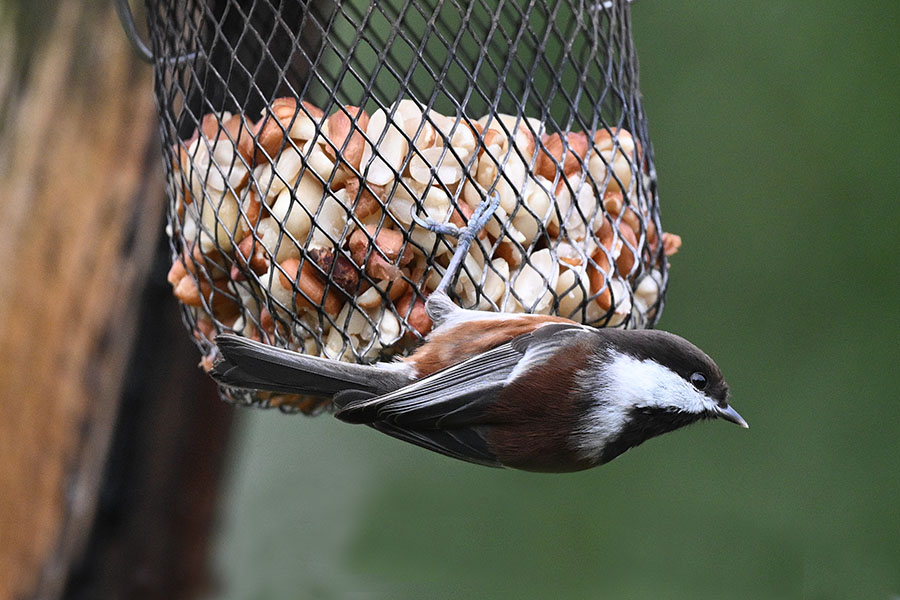
Chestnut-backed Chickadee
Squirrels love peanuts (and all other nuts) so expect them to great lengths to feast on them. Metal feeders make it more difficult for them to access nuts, but in areas where squirrels are a problem, weight-activated feeders and specialized baffles placed above or below feeders that are situated away from where squirrels can jump up or leap across onto may be needed.
Note that both raw and wet roasted peanuts can become contaminated with aflatoxins (naturally occurring toxins produced by certain species of fungi that flourish under humid conditions) so serve only roasted ones and be sure to discard any that become soggy. Install large baffles over peanut feeders during the winter to provide shelter from the rain.
It is best to store peanuts in an airtight container in a cool, dry place. Try to avoid humid storage locations, which can facilitate fungal growth. A freezer or fridge is ideal for both short- or long-term storage.
BC Birds Attracted to Peanuts: Downy Woodpecker, Hairy Woodpecker, Northern Flicker, Pileated Woodpecker, Blue Jay, Steller’s Jay, Black-billed Magpie, American Crow, Common Raven, Black-capped and Chestnut-backed Chickadee, Bushtit, Red-breasted Nuthatch, White-breasted Nuthatch, Brown Creeper, European Starling, Spotted Towhee, American Tree Sparrow, Chipping Sparrow, Fox Sparrow, Song Sparrow, White-throated Sparrow, Golden-crowned Sparrow, White-crowned Sparrow, Dark-eyed Junco, Red-winged Blackbird, Brewer’s Blackbird, Common Grackle, Baltimore Oriole, Common Redpoll, Pine Siskin, American Goldfinch.
Have more questions? Visit your local Buckerfield's and we'll be happy to help!