Chestnut-backed Chickadees
By Myrna Pearman, Mother Nature’s Naturalist and Backyard Birding Expert
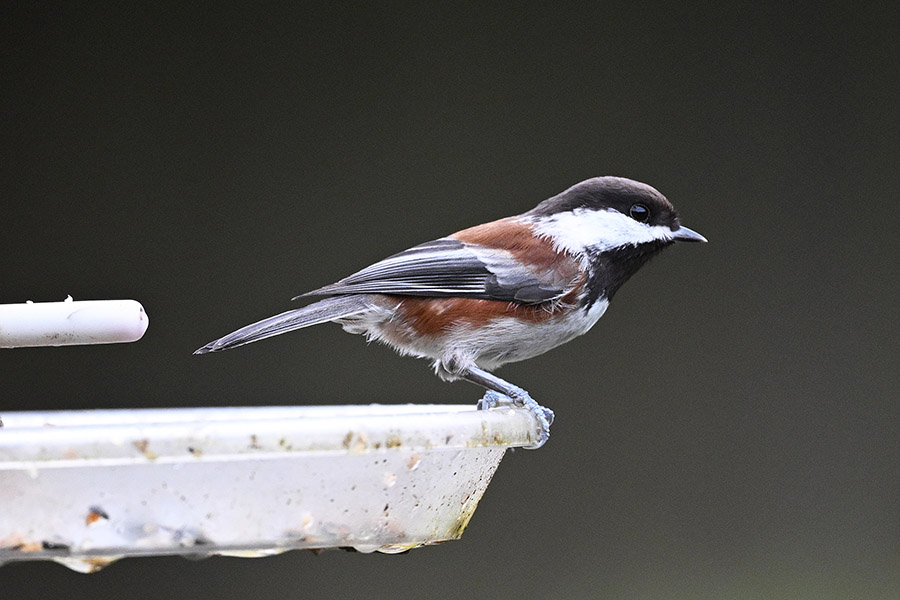
Chestnut-backed Chickadees are delightful backyard birds. They are year-round residents of Vancouver Island as well as across the southern regions of the BC Interior, and their rich chestnut colouration, acrobatic abilities, and love of both seeds and suet make them one of the most common and beloved wild neighbours.
Not only will these chickadees frequent your bird feeding stations all winter long, but a pair or two might also stick around your yard or neighbourhood in the spring to raise their family.
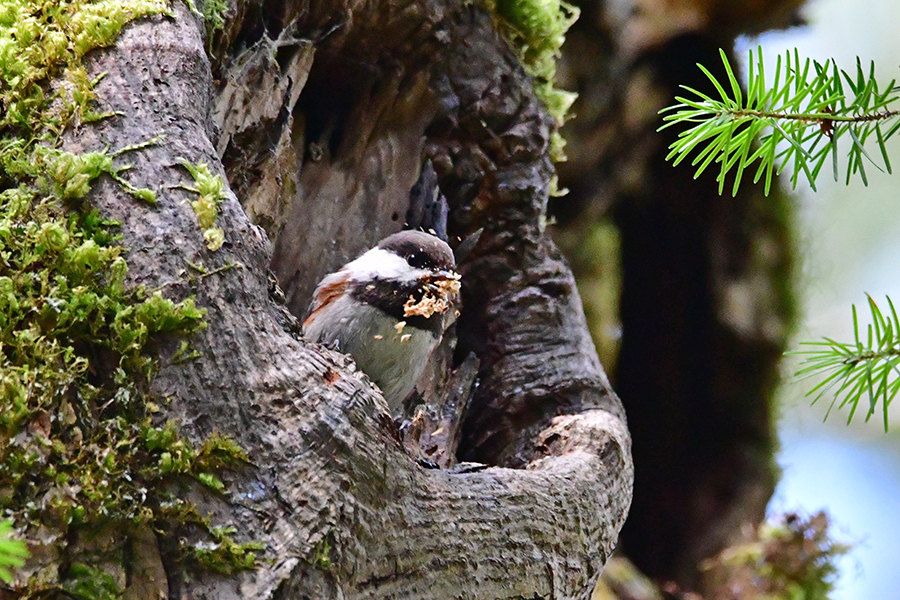
Chestnut-backed Chickadees are cavity nesters. Since they lack strong enough beaks to excavate harder wood, they will peck out a small cavity in a rotted snag that has punky heartwood. They will also take up residence in cavities excavated by other species, usually in trees, and will readily use nestboxes.
While the male will help with nest site selection and cavity excavation, only the female builds the actual nest. This process usually takes about a week. Once she has laid her clutch (usually about 6 eggs) and commences incubation, the male will bring food to her.
The eggs usually hatch after about two weeks of incubation, but may take longer to hatch during cold, rainy weather. When the young are newly hatched, the female feeds them food that the male has delivered to her. After that, both adults actively feed the young.
As with all birds, the nestlings grow quickly. By the time they are 15 to 16 days old, the adults make approximately 200 feeding visits per day! They then decrease the visits as the young approach fledging age, at about day 21.
Both adults remove their young’s fecal sacs (poop encased in a gelatinous wrapping), which are dropped away from the nest. Sacs are removed up to 1–2 days prior to fledging and then are left to build up in the nest. Apparently, ants will sometimes enter the nests after the young fledge and eat the fecal sacs as well as other detritus that has accumulated in and on the nesting material.
Luckily, it appears that—based on Christmas Bird Count and Breeding Bird Survey data— the populations of Chestnut-backed Chickadees are stable.
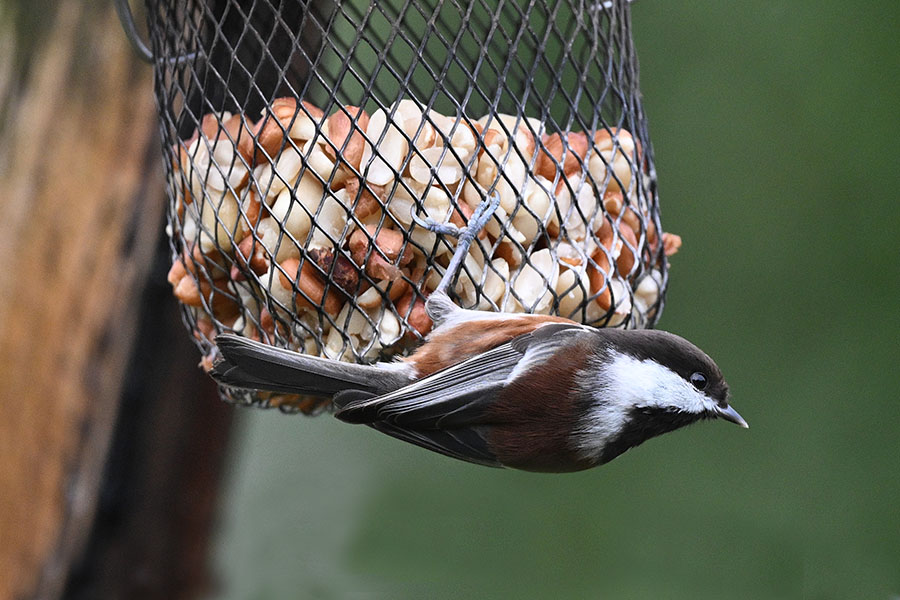
If you would like these delightful little chickadees to nest in your backyard, keep feeding them sunflower seeds (chips are the best) as well as suet, and make sure they have a source of fresh water. Leave a few snags if you have them on your property, as the chickadees may try to excavate their own nest site. Finally, set out a small nestbox in a wooded and secluded corner of your yard. Make sure the entrance hole is no larger than 29 mm (1 1/8 in.). This small size will exclude larger birds from entering, especially the pesky and non-native House Sparrow.
Enjoy your chickadees!
Have more questions? Visit your local Buckerfield's and we'll be happy to help!