Celebrating American Goldfinches
By Myrna Pearman, Mother Nature’s Naturalist and Backyard Birding Expert
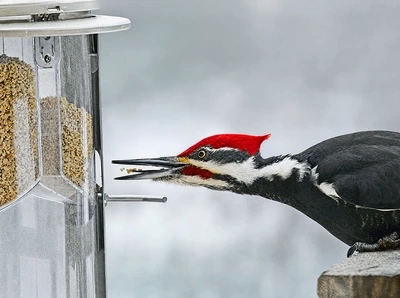
Bird feeding stations are often quieter during the summer months because natural food options such as insects, fruits, nectar and seeds are widely available. However, well-stocked feeders will still attract a variety of summer birds, including chickadees, nuthatches, woodpeckers and finches.
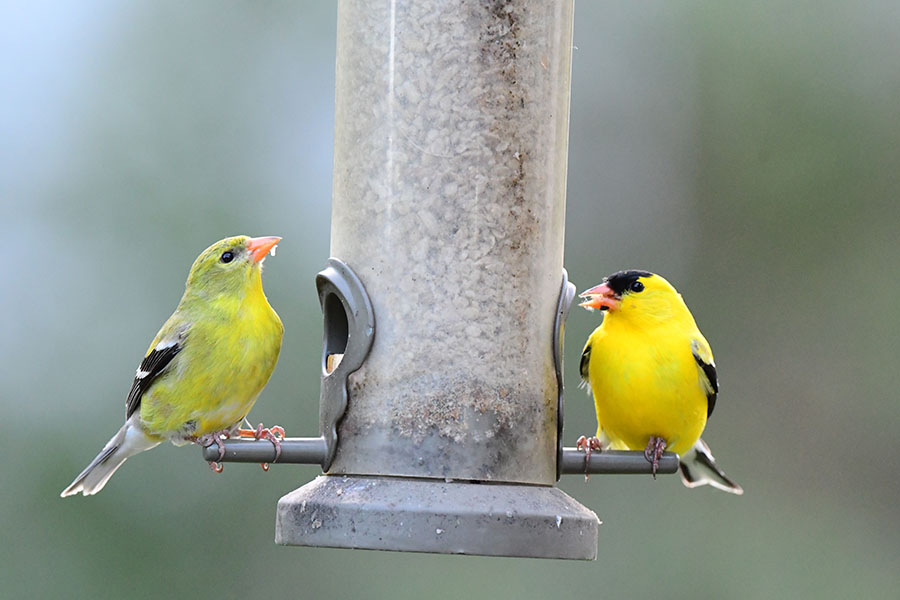
Of all the finch species that visit feeding stations, the American Goldfinch is often the most common feeder patron. The reason for their attraction to seed feeders is because—unlike most other bird species—they are almost exclusively granivorous (seed eaters). They consume very few insects and even feed seeds to their nestlings!
American Goldfinches, beautifully attired in yellow and black, are abundant and widely distributed finches throughout North America and breed throughout southern British Columbia, including Vancouver Island. Breeding males are very striking while the females have a more muted plumage coloration. During the winter, both males and females molt into a drab, unstreaked brownish plumage.
American Goldfinches are unique because they breed late in the season, even into early July. It appears that this delay coincides with the flowering of thistles, one of their most important sources of both food and down (used to line their nests). They are also unique because they have a relatively short nesting season compared to other bird species.
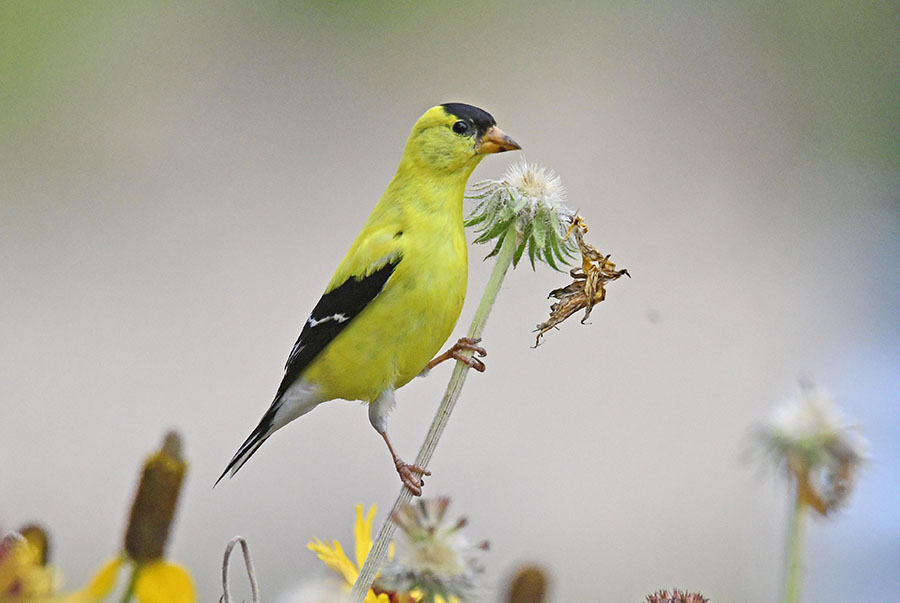
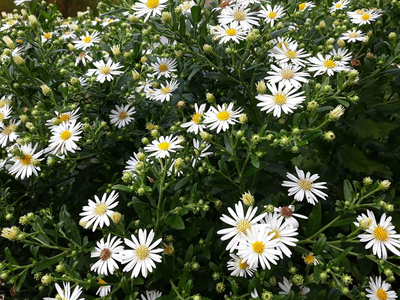
Goldfinches are gregarious, usually feeding in the company of others. During the summer, they are most commonly found in weedy fields and suburban gardens where they feed on such plants as thistles, coneflower, asters, cosmos, black-eyed Susan, bee balm, goldenrod, milkweed and sunflowers. A seed feeder placed near natural food sources will be very popular as a supplemental food source.
The best seeds to offer goldfinches include sunflowers, sunflower chips and Mother Nature’s finch blend, which includes nyjer seed, sunflower chips, canola, canary grass and gold proso millet. Any type of feeder can be used, including fly-through, hopper and tube. If offering nyjer seed, dispense this expensive seed from special thistle feeders to reduce waste. Goldfinches will also eat seeds that spill on the ground below hanging feeders.
Like other finches, American Goldfinches will sometimes contract contagious diseases at feeding stations. To minimize the risk of contamination, clean your feeders regularly and rake up spilled seeds.
American Goldfinches also love to bathe. Adding a simple bird bath in your yard will bring in these delightful little songsters and will add even more delight to your summer backyard bird watching!
Have more questions? Visit your local Buckerfield's and we'll be happy to help!